Wednesday, April 3, 2013

New Library Update Available to View

The newest episode of Library Update is up on YouTube. This is part one of Episode 18, Little Library With a Big Heart. Make sure to catch parts 2 and 3 of the episode as well.

The West Virginia Library Commission is committed to promoting, assisting, and supporting high quality library services and information resources to all West Virginia residents. This includes getting relevant information out to library directors, their staff, and patrons through various formats. Currently the Library Commission uses its website, Facebook, Twitter, Blog, e-bulletins and now YouTube to disseminate information. 

WVLC plans on bringing you current programs, topics, and trends. This broad spectrum includes partnerships, training, programming, and service. We want this program to be a useful, entertaining resource for you. If you ever have any questions or comments regarding topics on this show, please do not hesitate to call us at 1-800-642-9021. 

This program is not intended to act as a calendar of events, but as a vehicle of ideology and practical tips. Specific event information can always be found on our website www.librarycommission.wv.gov and at your local libraries.

The video in this post is the first segment of the episode. Check it out, then view parts 2 and 3. Make sure you subscribe to the West Virginia Library Commission YouTube channel so you don't miss the newest episodes!

Thursday, March 28, 2013

Braille Tutoring Available


WHEN YOUR VISION NO LONGER WORKS FOR YOU
 WE CAN HELP!!!

Can you no longer write and read your shopping list?
Can you no longer write down an appointment date?
Can you no longer write down important phone numbers and addresses?
Do you find yourself waiting for someone with vision to come help you take care of tasks requiring the ability to read and write?
Can you no longer write a delicious recipe your friend told you about?
Are there other reading and writing tasks you have had to give up because you can no longer see?

If the answer to any of these questions is yes, we can help.

The National Federation of the Blind of West Virginia is pleased to offer free braille training to anyone interested in finding an alternative way to read and write.  The program is offered on a one-on-one basis.  There is no cost to the student.  Training may be offered in the student’s home or at a designated location agreeable to both the student and tutor.

The student will receive the following:
Travel money if they travel to the teacher’s location
Braille instruction book
Slate & stylus (tools used for writing Braille)
Braille writing paper

This program is designed to offer the individual who can no longer read and write the freedom to resume these activities. 

To enroll in the program or obtain additional information please contact:
            Ed McDonald
            (304) 788-0129

Funding for this project is made possible by a grant through the West Virginia Division of Rehabilitation Services.

Friday, February 22, 2013

Capitol Reads


February's Capitol Read is The Beekeepers Lament: How One Man and Half a Billion Honey Bees Help Feed America by Hannah Nordhaus

The honey bee is a willing conscript, a working wonder, an unseen and crucial link in America's agricultural industry. But never before has its survival been so unclear—and the future of our food supply so acutely challenged.

Enter beekeeper John Miller, who trucks his hives around the country, bringing millions of bees to farmers otherwise bereft of natural pollinators. Even as the mysterious and deadly epidemic known as Colony Collapse Disorder devastates bee populations across the globe, Miller forges ahead with the determination and wry humor of a true homespun hero. The Beekeeper's Lament tells his story and that of his bees, making for a complex, moving, and unforgettable portrait of man in the new natural world.


More information about Capitol Reads selections can be found on the WVLC website.

Wednesday, February 6, 2013

New Library Update Available to View

The newest episode of Library Update is up on YouTube. This is part one of Episode 17, WV Reads 150. Make sure to catch parts 2 and 3 of the episode as well.
The West Virginia Library Commission is committed to promoting, assisting, and supporting high quality library services and information resources to all West Virginia residents. This includes getting relevant information out to library directors, their staff, and patrons through various formats. Currently the Library Commission uses its website, Facebook, Twitter, Blog, e-bulletins and now YouTube to disseminate information. 

WVLC plans on bringing you current programs, topics, and trends. This broad spectrum includes partnerships, training, programming, and service. We want this program to be a useful, entertaining resource for you. If you ever have any questions or comments regarding topics on this show, please do not hesitate to call us at 1-800-642-9021. 

This program is not intended to act as a calendar of events, but as a vehicle of ideology and practical tips. Specific event information can always be found on our website www.librarycommission.wv.gov and at your local libraries.

The video in this post is the first segment of the episode. Check it out, then view parts 2 and 3. Make sure you subscribe to the West Virginia Library Commission YouTube channel so you don't miss the newest episodes!

Friday, January 25, 2013

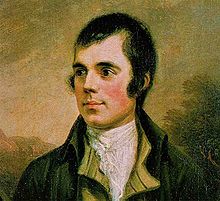
Burns Supper


A Burns supper is a celebration of the life and poetry of the poet Robert Burns, author of many Scots poems. The suppers are normally held on or near the poet's birthday, 25 January, sometimes also known as Robert Burns Day (or Rabbie Burns Day) or Burns Night, although they may in principle be held at any time of the year.

Shortly after Burns's death, groups of friends and acquaintances began to gather in his memory. In 1859, the centenary of his birth, memorial events were held all over Scotland and among the Scottish diaspora, and 25 January virtually became a national holiday. The memorial events have taken on a particular structure: there is a meal, one ingredient of which must be the haggis, addressed with Burns's poem before serving. After the meal there are two speeches with fixed titles, but variable contents: "To the Immortal Memory" and "To the Lasses." "The Immortal Memory" offers a serious recollection of Burns, usually with emphasis on him as man rather than as poet, and often incorporates legendary instances of his humanity: he is said, for example, to have warned a woman selling ale without a license that the tax collectors would be by late in the day, thereby giving her the opportunity to destroy the evidence. The toast "To the Lasses" is usually short and humorous, paying tribute to Burns's way with women and to the many descriptive songs he wrote about them. Interspersed among these speeches and other toasts are performances of Burns's songs and poems. Typically, the event concludes with the singing of "Auld Lang Syne" by the assembled company, arrayed in a circle and clasping hands.

Should auld acquaintance be forgot,
And never brought to mind?
Should auld acquaintance be forgot,
And auld lang syne?

CHORUS:
For auld lang syne, my dear,
For auld lang syne,
We'll tak a cup of kindness yet,
For auld lang syne!

Learn more about Robert Burns using WVLC's database collection. Or stop in to pick a collection of his poems.

Thursday, January 17, 2013

Capitol Reads


January's Capitol Read is Founding Mothers: The Women Who Raised Our Nation by Cokie Roberts

In the histories of the American Revolution, much has been written about America's founding fathers, those brave men who signed the Declaration of Independence, battled the British, and framed the Constitution. Yet the wives, mothers, sisters, and daughters who supported, encouraged, and even advised them have been virtually ignored.

In Founding Mothers, Cokie Roberts brings to light the stories of the women who fought the Revolution as valiantly as the men, sometimes even defending their very doorsteps from British occupation. While the men went off to war or to Congress, the women managed their husbands' businesses, ran the farms, and raised their children. These women who sacrificed for the fledgling nation spent months or even years apart from their husbands, at a time when letters were their only form of contact.

Drawing upon personal correspondence and private journals, Founding Mothers brings to life the everyday trials, extraordinary triumphs, and often surprising stories of Abigail Adams, Mercy Otis Warren, Deborah Reed Franklin, Eliza Pinckney, Martha Washington, and other patriotic and passionate women, each of whom played a role in raising our nation.

More information about Capitol Reads selections can be found on the WVLC website.